Electricians do far more than change light bulbs and reset breakers. They design, install, maintain, and repair the electrical systems that power modern life, from the wiring inside your walls to the service feeding an entire commercial building. But not all electrical work is the same. This guide explains what electricians do day to day, how residential work differs from commercial work, and why the distinction matters when you hire one in Kyle, TX.
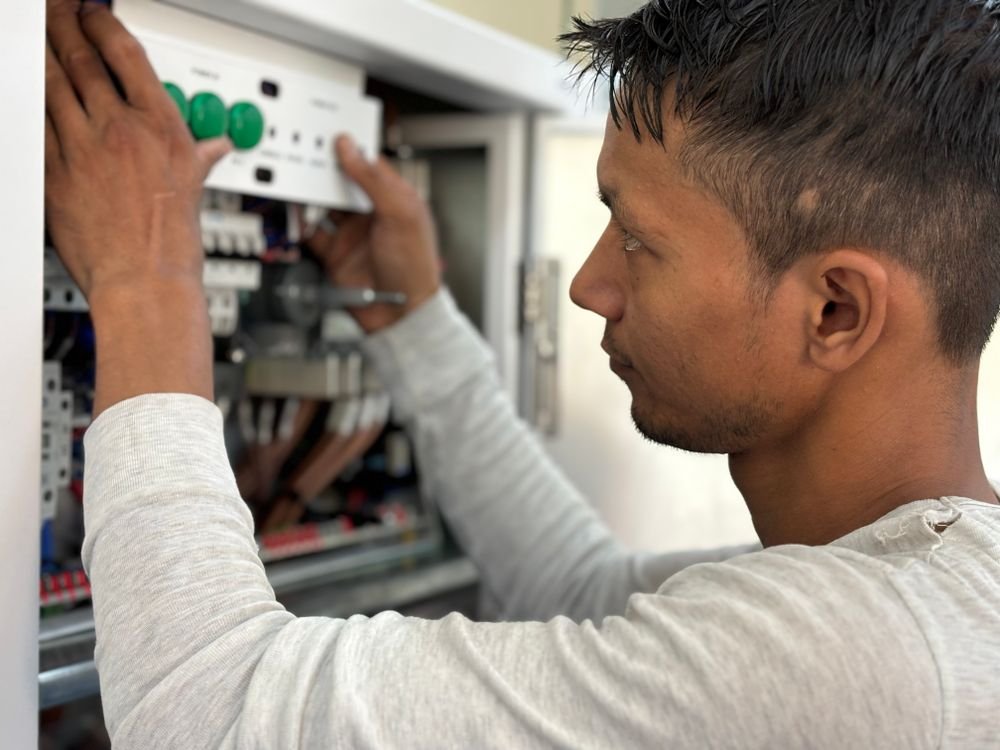
What an electrician does every day
At its core, an electrician’s job is to make electricity safe and useful. Typical work includes:
- Installing wiring and devices in new construction and remodels, from rough-in wiring to outlets, switches, and fixtures.
- Upgrading panels and service so homes and businesses can handle modern electrical loads safely.
- Troubleshooting failures, tracing dead circuits, tripping breakers, and intermittent faults to their source.
- Repairing and replacing damaged wiring, faulty devices, worn panels, and malfunctioning equipment.
- Installing dedicated circuits for appliances, HVAC, EV chargers, and commercial equipment.
- Testing and inspection, verifying that systems are safe, grounded, and code-compliant.
- Emergency response, making dangerous situations safe at any hour.
Residential electrical work
Residential electricians specialize in homes: single-family houses, townhomes, and apartments. The work centers on 120/240-volt single-phase systems and the things homeowners care about most: safety, comfort, and convenience. Common residential jobs include panel upgrades, outlet and switch repair, lighting installation, ceiling fan installation, EV charger installation, whole-house surge protection, generator installation, and troubleshooting the everyday mysteries of flickering lights and dead outlets.
Residential work is personal. The electrician is in your home, working around your family, your pets, and your schedule. Communication matters as much as technical skill: a good residential electrician explains what is wrong in plain language, gives clear pricing before starting, and leaves the work area clean.
Commercial electrical work
Commercial electricians work in businesses: offices, restaurants, retail stores, warehouses, and industrial facilities. The scale and complexity are a step up. Commercial buildings often use three-phase power at higher voltages, with far greater loads, stricter code requirements, and systems like emergency lighting, fire alarm interfaces, and building automation that homes simply do not have.
Commercial work also runs on a different rhythm. Downtime costs money, so jobs are scheduled around business hours, phased to keep operations running, and coordinated with other trades, property managers, and inspectors. Documentation, permits, and code compliance carry extra weight because the liability exposure is greater.
Key differences at a glance
- Voltage and power: homes use 120/240V single-phase; commercial sites often use 208V or 480V three-phase.
- Scale: a home panel might have 30 circuits; a commercial building can have hundreds.
- Code: both follow the National Electrical Code, but commercial occupancies face additional requirements for emergency systems, accessibility, and energy use.
- Scheduling: residential work fits around family life; commercial work fits around business operations.
- Equipment: commercial electricians regularly handle motor controls, transformers, and switchgear rarely seen in homes.
Safety note: hire the right electrician for the job
Many electricians handle both residential and commercial work, but always confirm the one you hire has experience with your type of project. A residential specialist may not be set up for a restaurant buildout, and a commercial contractor may not be the best fit for a delicate home troubleshooting job. In Texas, verify the electrician holds a current license from the Texas Department of Licensing and Regulation. And for any project involving the panel, new circuits, or service changes, insist on permits and inspections. They protect you, not just the city.
Training: how electricians learn the trade
Becoming an electrician takes years. In Texas, it starts with an apprenticeship combining classroom instruction and thousands of hours of supervised on-the-job training, followed by journeyman licensing and exams. Master electricians complete additional years of experience and testing. That training is why electrical work is not a learn-from-videos trade: the knowledge of code, safety practices, and troubleshooting only comes from guided experience with real systems.
Whether you need a home repair, a panel upgrade, or work on your business, you want an electrician with the right experience for the job. Browse our full range of residential and commercial electrical services in Kyle, TX. Call KyleElec at (512) 555-0199 or email kyleelecc@gmail.com, and tell us what you need. We will match the right expertise to your project.
Leave a Reply