Breaker Sizes Explained: What Is a 40-Amp Circuit Breaker For?
Open your breaker panel and you will see a row of switches stamped with numbers: 15, 20, 30, 40, 50. Those numbers are the breaker’s amperage rating, and each one is matched to a specific wire size and job. Using the wrong size breaker is one of the most dangerous electrical mistakes a homeowner can make. Here is what breaker sizes mean, what a 40-amp breaker is for, and why the size must always match the wire.
What a breaker size actually means
A breaker’s amperage rating is the maximum current it will allow before tripping. A 15-amp breaker trips when the circuit draws more than about 15 amps. The rating is chosen to protect the wire, not the appliance. Wire has a maximum safe current too, and the breaker must trip before the wire overheats. That is why breaker size and wire size are always paired by code, and why the pairing is not optional.
Common breaker sizes and what they serve
Here is the standard lineup you will find in a Kyle home:
- 15-amp breakers protect general lighting and outlet circuits wired with 14-gauge wire. This is the most common breaker in a home.
- 20-amp breakers protect kitchen, bathroom, garage, and laundry circuits wired with 12-gauge wire, where heavier loads are expected.
- 30-amp breakers serve electric dryers, water heaters, and some air conditioners, wired with 10-gauge wire.
- 40-amp breakers serve electric ranges, cooktops, larger air conditioning units, and some EV chargers, wired with 8-gauge wire.
- 50-amp breakers and above serve subpanels, large EV chargers, electric furnaces, and whole-home equipment, with correspondingly heavy wire.
What is a 40-amp breaker for?
A 40-amp breaker is a dedicated-circuit breaker for a single large appliance. The most common 40-amp loads in a home are electric ranges and ovens, which draw 30 to 40 amps at full heat, and central air conditioning condenser units in the 3 to 5 ton range common in Texas homes. Some Level 2 EV chargers are also installed on 40-amp circuits, and electric tankless water heaters can require them as well. A 40-amp circuit is always a dedicated home run from the panel to the appliance, never shared with general outlets or lights, because a shared circuit could not safely carry the load.
Why the breaker must match the wire
This is the critical safety rule. A 40-amp breaker must be paired with wire rated for 40 amps, typically 8-gauge copper. If someone installs a 40-amp breaker on thinner 14-gauge wire, the wire can overheat and start a fire inside the wall long before the breaker trips. The breaker is the wire’s bodyguard; an oversized breaker is a bodyguard that falls asleep on the job. Undersizing is a problem too: a 15-amp breaker on a circuit wired for 40 amps will trip constantly under normal appliance loads. The breaker, the wire, and the load must all be sized together as a system.
What happens when a breaker is the wrong size?
An oversized breaker is the dangerous direction. The wire overheats, insulation melts, and a fire can start inside a wall with no warning and no tripped breaker to alert you. This is one of the leading causes of residential electrical fires, and it often traces back to a homeowner or handyman swapping in a bigger breaker to stop nuisance tripping. An undersized breaker is merely annoying; it trips under normal use. But nuisance tripping is still a signal worth investigating, because it can mean the circuit is overloaded or the appliance is failing, not that the breaker is too small.
Single-pole vs. double-pole: why 40-amp breakers look different
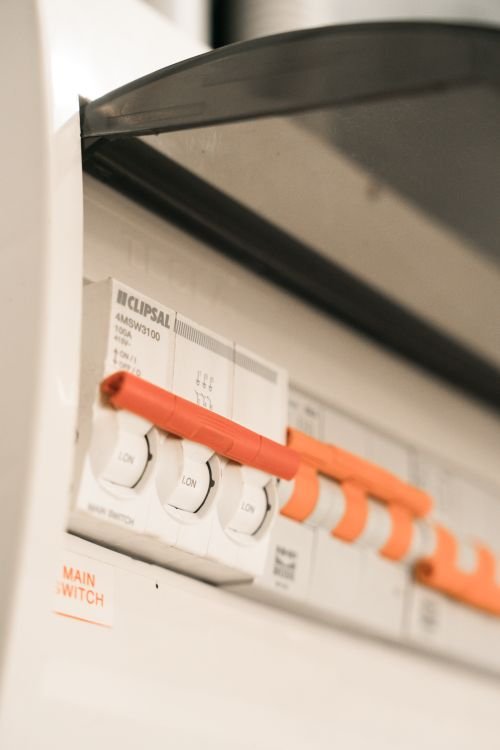
Breakers rated 30 amps and above are usually double-pole breakers that take up two slots in the panel and supply 240 volts. Your 40-amp range breaker is a double-pole breaker feeding both hot legs of your electrical service. Smaller 15 and 20 amp breakers are usually single-pole, supplying 120 volts to lights and outlets. If you are ever unsure what you are looking at, the panel schedule on the inside of the panel door or an electrician can identify each breaker for you.
Safety note: never change breaker sizes yourself
Changing a breaker’s amperage changes the protection scheme for the entire circuit. Installing a larger breaker without verifying the wire size, the connections, and the load calculation is a leading cause of electrical fires. Breaker work also means working inside the panel around live parts that stay energized even with the main breaker off. If a breaker keeps tripping, if you are adding a large appliance like an EV charger or a new range, or if you suspect a mismatched breaker, have an electrician evaluate the circuit. The service call costs far less than the alternative.
Breaker sizes are not arbitrary; they are a carefully matched safety system where every component protects the next. Learn more about our circuit breaker repair service in Kyle, TX. Call KyleElec at (512) 555-0199 or email kyleelecc@gmail.com if you have questions about your panel or a breaker that keeps tripping.