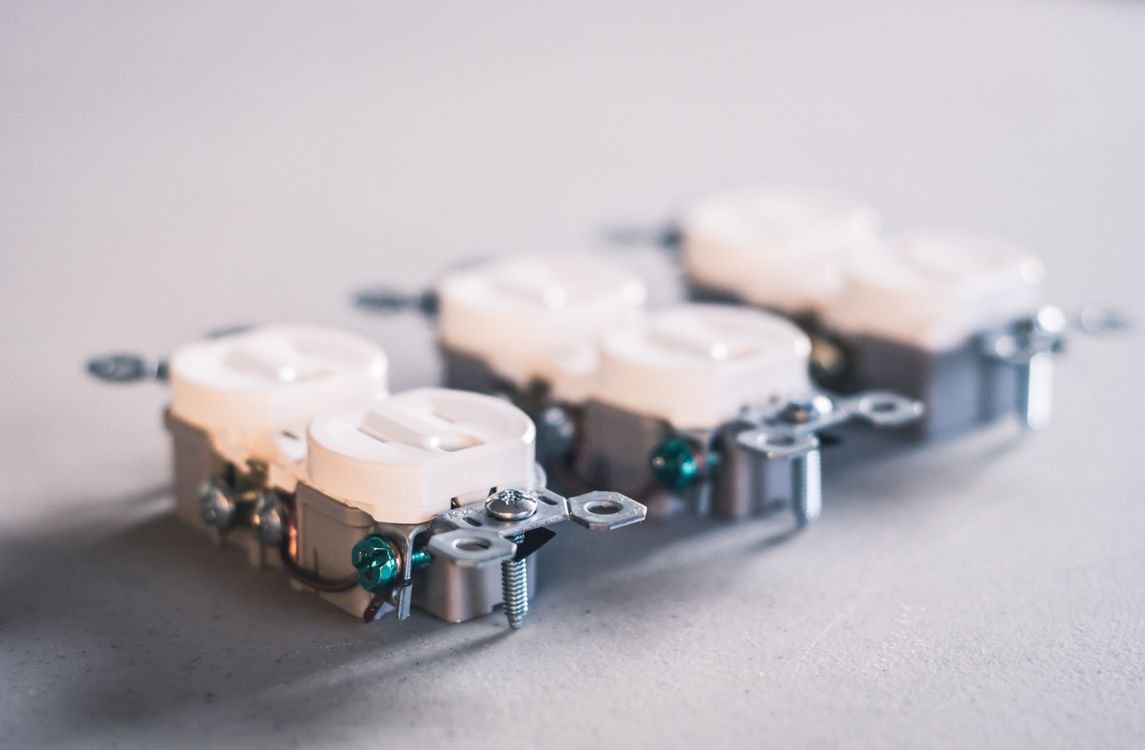
If you have ever replaced a GFCI outlet and stared at the back of the new one, you have seen the words that confuse almost every homeowner: LINE and LOAD. These two sets of terminals are the key to how GFCI protection works in your Kyle home. Understanding the difference helps you know what your electrician is doing, and it explains some of the most puzzling outlet problems homeowners encounter.

What a GFCI outlet actually does
A ground-fault circuit interrupter monitors the current flowing out on the hot wire and back on the neutral wire. If even a tiny amount leaks away, through water, a person, or damaged insulation, the GFCI trips in a fraction of a second and cuts power. This is what protects you from electric shock in kitchens, bathrooms, garages, and outdoor areas, which is why these outlets are required there.
LINE: where power comes in
The LINE terminals are where the power feed from the breaker panel connects to the GFCI. This is the incoming hot and neutral. Every GFCI outlet must have its LINE terminals connected, or it cannot function at all. When an electrician installs a GFCI that protects only its own two outlets, the LINE terminals are connected and the LOAD terminals stay empty.
LOAD: what the GFCI protects downstream
The LOAD terminals are where additional ordinary outlets downstream get their power, through the GFCI’s protection. When outlets are wired to the LOAD side, the GFCI guards them all: a ground fault at any of those outlets trips the GFCI. This is why one GFCI in a bathroom can protect the second bathroom outlet, or one outdoor GFCI can protect several more. It saves money on GFCI devices, and it is a common wiring layout in Kyle homes.
Where GFCI protection is required in your home
Electrical code requires GFCI protection anywhere water and electricity can meet. In a typical Kyle home, that means all bathroom outlets, all kitchen countertop outlets, garage outlets, outdoor outlets, laundry and utility sinks, unfinished basements, and crawl spaces. Newer code editions have extended GFCI requirements even further, so an older home may have gaps. An electrician can survey your home and bring every required location up to current protection standards, often by feeding several ordinary outlets from one GFCI’s LOAD terminals.
How to tell which outlets are protected
Here is a handy homeowner test that requires no tools. Press the TEST button on each GFCI outlet in your home, then walk around and see which outlets lost power. The ones that went dead are protected by that GFCI through its LOAD terminals. Press RESET when you are done. If you find that a bathroom or outdoor outlet has no GFCI protection at all, that is a safety gap worth closing.
Why a dead outlet may mean a tripped GFCI elsewhere
This is the number one mystery that LINE and LOAD wiring explains. Your kitchen outlets are dead, but no breaker tripped. The reason is often a GFCI in the garage or a bathroom that tripped and cut power to everything on its LOAD side. Before you call for help, press the RESET button on every GFCI you can find. If power returns, the mystery is solved.
Common LINE/LOAD wiring mistakes
Swapping LINE and LOAD is the classic do-it-yourself error. When power is connected to the LOAD terminals instead of LINE, the GFCI’s own outlets may work while nothing downstream is protected, or the device may refuse to reset. Reversed wiring at a GFCI is exactly the kind of hidden defect that a home inspection or an electrician’s visit catches.
Safety note: this is knowledge, not a DIY guide
Understanding LINE vs. LOAD helps you talk to your electrician and troubleshoot sensibly, but it is not an invitation to rewire outlets yourself. Opening an outlet box means working inches from live wires, and a miswired GFCI can silently leave your family unprotected. Testing and resetting GFCIs is a safe homeowner job; installing or rewiring them belongs to a licensed electrician.
GFCI protection is one of the simplest, most effective safety upgrades in any home. See our outlet and switch repair in Kyle, TX. Call KyleElec at (512) 555-0199 or email kyleelecc@gmail.com and we will make sure every outlet in your home is protected and wired correctly.