You plug in a phone charger and nothing happens. Or half the outlets in a room are dead while the rest work fine. A dead outlet is one of the most common electrical complaints we hear from Kyle homeowners, and the good news is that the cause is often something simple. This guide walks you through safe troubleshooting steps in order, and tells you exactly where to stop and call an electrician.
Step 1: Test the device and the outlet
First, rule out the obvious. Plug a different device, like a lamp you know works, into the dead outlet. Then plug the original device into a different outlet. This tells you whether the problem is the device or the outlet. You would be surprised how often a dead charger or a tripped power strip is the real culprit.
Step 2: Check for a tripped GFCI outlet
This is the most common cause of a dead outlet. GFCI outlets with TEST and RESET buttons protect bathrooms, kitchens, garages, and outdoor areas, and one GFCI can protect several standard outlets downstream from it. A tripped GFCI in a bathroom can kill power to outlets in another room entirely. Walk through your kitchen, bathrooms, garage, and outdoor outlets, and press the RESET button on any GFCI you find. If the dead outlet springs back to life, you found it.
Step 3: Check the breaker panel
If no GFCI is tripped, head to your breaker panel. Look for a breaker that is in the tripped position, often sitting between ON and OFF. Push it firmly to OFF, then back to ON. If power returns, the circuit was simply overloaded. If the breaker trips again immediately or within a short time, leave it off and call an electrician; something on the circuit is shorting or overloading it.
Step 4: Check whether a switch controls the outlet
In many Kyle homes, especially bedrooms and living rooms, a wall switch controls one half of a duplex outlet for a floor lamp. If only one outlet seems dead, flip nearby switches to see if power returns. This is a design feature, not a fault.
Step 5: Look for a loose or damaged outlet
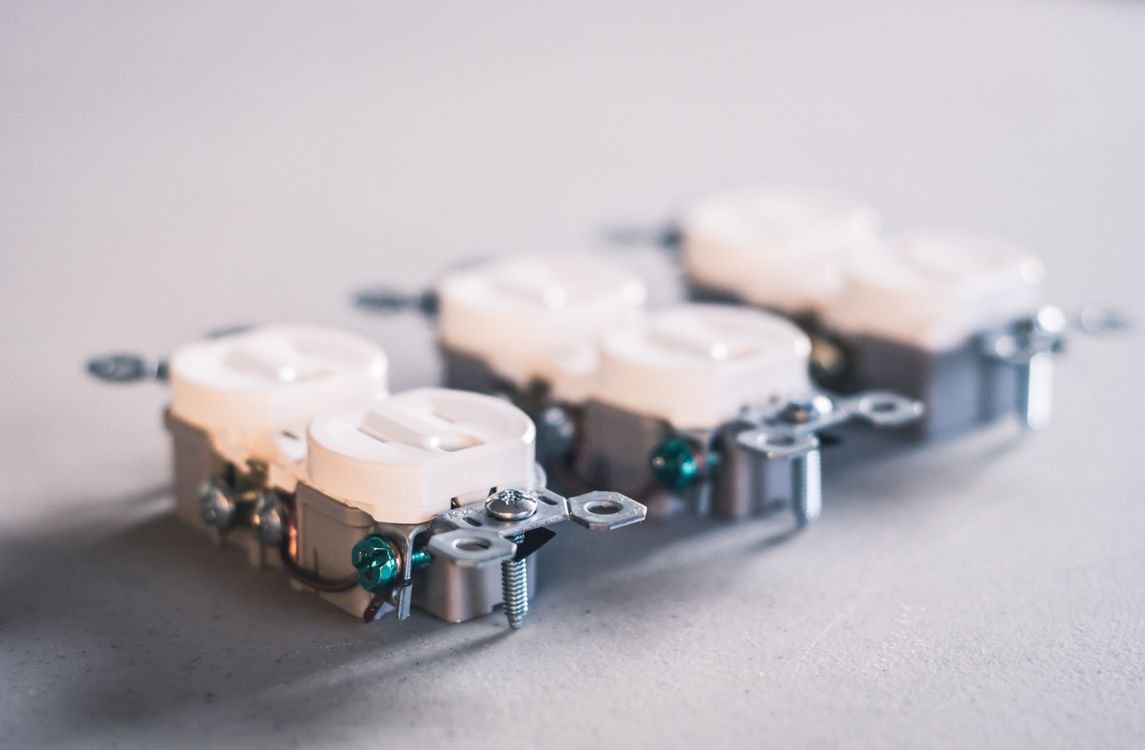
If the outlet works only when you wiggle the plug, the outlet’s internal contacts are worn out, or a wire connection behind it is loose. A loose outlet is not just an annoyance; arcing at a loose connection generates heat and is a fire risk. Do not keep using it. Replacing a worn outlet is a quick job for an electrician.
Safety note: where to stop
Stop your troubleshooting and call a professional if you see or smell any of the following: burn marks or melted plastic around the outlet, a burning odor, buzzing or crackling sounds, an outlet that is hot to the touch, or a breaker that will not stay on. Do not remove the outlet cover or touch the wiring yourself. These are signs of a fault inside the wall that needs professional repair.
Why outlets die in the first place
Outlets fail for a handful of reasons: worn-out internal contacts after years of use, loose backstab wire connections (a common shortcut that loosens over time), tripped GFCI or AFCI protection, damaged wiring from rodents or nails, and corrosion in outdoor or garage outlets. Knowing the cause matters because the fix is different for each, and an electrician can diagnose it quickly.
When a simple fix is not enough
If several outlets in different rooms are dead, the problem may be a failed breaker, a loose connection at the panel, or damaged wiring feeding a whole circuit. If outlets throughout the house are failing one by one, aging wiring or an overloaded panel may be the root cause. In these cases, a broader electrical evaluation makes more sense than fixing outlets one at a time.
Most dead outlets turn out to be a tripped GFCI or breaker, and you can check both safely in a few minutes. For anything beyond that, professional help is the safe choice. Learn more about our outlet and switch repair service in Kyle, TX. Call KyleElec at (512) 555-0199 or email kyleelecc@gmail.com and we will get your power back on.
Leave a Reply