Your electrical panel is the heart of your home’s electrical system. Every light, outlet, and appliance draws its power through that gray metal box, and when it can no longer keep up, the whole house feels it: breakers that trip, lights that dim, and no room left for the upgrades you want. This guide explains what an electrical panel upgrade involves, what 200-amp service means, what drives the cost, and how to tell when the timing is right for your Kyle home.
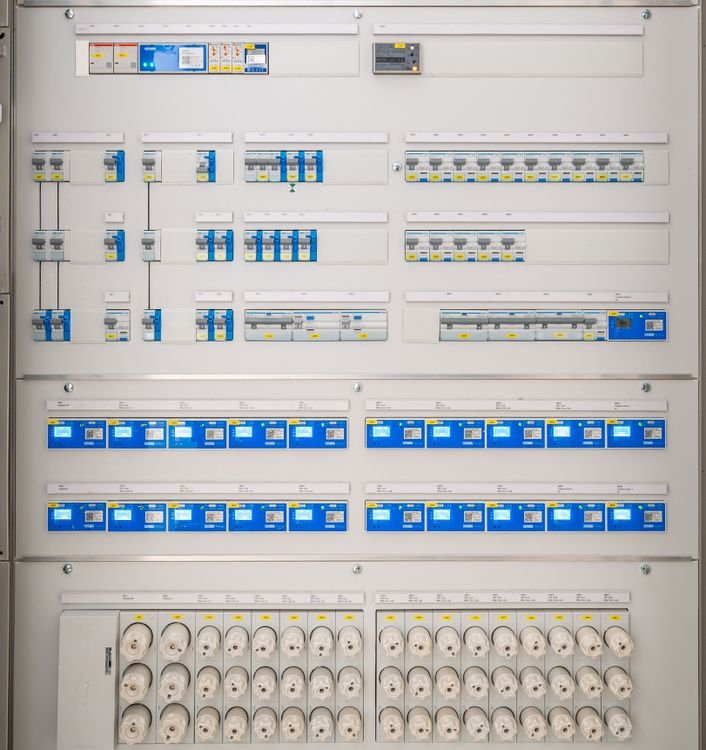
What does 200-amp service mean?
The amperage rating of your service is the maximum amount of electrical current your home can draw at once. Many older Kyle homes were built with 60-amp or 100-amp service, which was plenty when houses had a handful of appliances. Today’s homes run central air conditioning, electric dryers and ranges, home offices full of equipment, EV chargers, and more. A 200-amp service is the modern standard for a typical single-family home, providing enough capacity for current needs plus headroom for future additions.
An upgrade to 200 amps usually means replacing the panel itself, the main breaker, the service entrance conductors, and often the meter base and weatherhead, all sized for the higher capacity. Your electric utility must also approve the increased service size.
Signs your panel needs an upgrade
- Frequent breaker trips, especially when running normal combinations of appliances.
- The panel is full, with no open slots for new circuits, or it relies on tandem breakers stacked everywhere.
- You are adding major loads like an EV charger, a hot tub, a home addition, or switching from gas to electric appliances.
- The panel is old or obsolete, particularly certain discontinued brands known for safety issues, or a fuse box that predates modern breakers.
- Flickering or dimming lights when large appliances cycle on.
- The panel feels warm, buzzes, or shows rust, corrosion, or scorch marks.
What drives the cost of a panel upgrade?
Panel upgrade costs vary widely because no two jobs are identical. The main cost factors include:
- Service size and panel capacity. A straightforward 100-to-200-amp panel swap costs less than a full service upgrade requiring new service entrance wiring and utility coordination.
- Existing wiring condition. If the service entrance conductors, meter base, or grounding system need replacement to meet current code, that adds to the job.
- Panel location. Moving a panel to a new location, or one that is difficult to access, adds labor and materials.
- Code updates. Current code may require AFCI or GFCI breakers, whole-house surge protection, or grounding improvements that were not present before.
- Permits and inspections. Kyle requires permits for service upgrades, and the work must pass inspection.
- Utility coordination. The power company must disconnect and reconnect service, and their scheduling affects timing.
Because of these variables, the only way to get an accurate price is an on-site evaluation. Be cautious of quotes given sight unseen; a responsible electrician wants to see your existing panel, meter, and service entrance before pricing the work.
What the upgrade process looks like
- Evaluation. The electrician inspects your panel, meter base, grounding, and service entrance, and discusses your current and future electrical needs.
- Permitting. The electrician pulls the required permits with the city.
- Utility scheduling. A temporary power disconnect is coordinated with your electric provider.
- Installation day. The old panel comes out and the new one goes in, usually in a single day. Your power will be off for several hours, so plan accordingly.
- Inspection and reconnection. The work is inspected, the utility restores power, and every circuit is tested.
Safety note: this is not a DIY project
A service panel upgrade involves working directly with the unfused service entrance conductors, which carry the full power from the utility and cannot be shut off by any breaker in your home. One mistake can cause an arc flash, a fire, or a fatal shock. Panel upgrades require permits, licensed electricians, and inspections for good reason. Never attempt this work yourself.
Timing: when to schedule your upgrade
The best time to upgrade is before you need the capacity, not after problems force your hand. Plan your panel upgrade before you buy the EV, before the home addition is framed, or before you convert to electric appliances. If your panel shows any of the warning signs above, get an evaluation now rather than waiting for a failure. And if you are buying an older home in Kyle, have the panel inspected during your option period so you can negotiate or budget for the upgrade.
A modern 200-amp panel gives your home the capacity, safety, and flexibility it needs for decades to come. To find out what your upgrade would involve, see our electrical panel repair and upgrade service. Call KyleElec at (512) 555-0199 or email kyleelecc@gmail.com for an on-site evaluation in Kyle, TX.
Leave a Reply